‘No Price Posted’: Target Shopper Questions Missing Prices on Tags. Are You Being Played?
A shopper’s frustration over missing prices comes as the FTC demands answers from Target, Walmart and seven other companies about personalized pricing.
We receive compensation from the products and services mentioned in
this story, but the opinions are the
author's own. Compensation may impact where offers appear. We have not included all available products or offers.
Learn more about
how we make money
and
our editorial policies.
Advertiser Disclosure
All About Cookies is an independent, advertising-supported website. Some of the offers that appear on this
site are from third-party advertisers from which All About Cookies receives compensation. This compensation
may impact how and where products appear on this site (including, for example, the order in which they
appear).
All About Cookies does not include all financial or credit offers that might be available to consumers nor
do
we include all companies or all available products. Information is accurate as of the publishing date and
has
not been provided or endorsed by the advertiser.
Close
Editorial Policy
The All About Cookies editorial team strives to provide accurate, in-depth information and reviews to help
you, our reader, make online privacy decisions with confidence. Here's what you can expect from us:
All About Cookies makes money when you click the links on our site to some of the products and offers that
we mention. These partnerships do not influence our opinions or recommendations. Read more about how we
make money.
Partners are not able to review or request changes to our content except for compliance reasons.
We aim to make sure everything on our site is up-to-date and accurate as of the publishing date, but we
cannot guarantee we haven't missed something. It's your responsibility to double-check all information
before making any decision. If you spot something that looks wrong, please let us know.
Close
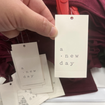
One Target shopper was ready to buy a couple of tops until they checked the tags — neither had a price.
In a Reddit post, they shared a photo of an A New Day clothing tag with no listed price and said the tables also had no prices posted.
“The lack of a visible price put me off entirely,” they wrote.[1]
Missing price tags don’t prove a store charges customers differently based on their personal information. But how do you know you’re getting a fair price when you can’t see what it is in the first place?
Federal regulators are asking that question, too.
On October 28, the Federal Trade Commission ordered Target, Walmart and seven other companies to provide information about whether and how they use personal data to set prices.[2]
Join thousands who get the latest security news, scams, and policy changes every week, right to their inbox.
By submitting this form you agree to receive emails from All About Cookies and to the
privacy policy and
terms.
The FTC wants to know how your price gets set
The FTC’s inquiry also covers Delta, United, JetBlue, Uber, Lyft, DoorDash and Instacart.
“Consumers deserve to know whether companies use their web surfing habits or other personal data to estimate the highest price they can charge each consumer,” FTC Chairman Andrew Ferguson said in the agency’s announcement.
The agency wants to examine whether prices vary between people based on personal information or loyalty program participation. Companies have 45 days after receiving the orders to respond.
According to Reuters, Delta, JetBlue and Instacart said they do not engage in personalized pricing.
However, the concern isn’t purely hypothetical. A Consumer Reports investigation found that Instacart shoppers were shown prices up to 23% apart for identical items from the same store at the same time.
Instacart later ended this practice. They also said the tests were randomized, rather than based on shoppers’ personal information.
What surveillance pricing could mean for your wallet
Surveillance pricing uses personal information to help determine the price or offer you see.
The goal is to “infer the highest price that the customer is willing to pay,” according to the Electronic Privacy Information Center, a privacy advocacy organization.
That differs from a price that changes for everyone as demand rises. The question here is whether information about you helps shape your particular offer.
The FTC’s 2025 research into pricing intermediaries identified tools that can use location, browsing patterns, purchase history and even mouse movements or items left in an online cart to tailor prices and promotions.
The effect could also extend beyond the number on a price tag. The FTC research also showed how shopping data can influence which products appear first, potentially steering someone toward more expensive options.
So you may need to question both the price and whether cheaper choices are being pushed out of view.
What you can do before you buy
Whether your price is data-driven or based on fair market value, it never hurts to shop around.
Get the price before checkout. If a tag or shelf label is missing, ask an employee or use a store scanner before you buy.
Compare the same item across sellers. Check the size, model, shipping charges and discount conditions so you’re comparing the full cost.
Document unexplained differences. Save screenshots with the time, item and account or membership status.
Review your privacy settings. Limit unnecessary app permissions and manage tracking cookies.
Consider a VPN when shopping online. A VPN masks your IP address, making it harder for retailers to infer your location from your connection.
The FTC inquiry may help reveal what shoppers cannot easily check themselves: whether the price they see reflects the product, or what a company has learned about their willingness to pay.
All-in-One Digital Security App with Servers in All 50 U.S. States
5.0
AllAboutCookies writers and editors score products based on a number of objective features as well as our expert editorial assessment. Our partners do not influence how we rate products.
Thomas Kent is a multi-disciplined reporter with over a decade of experience covering online platforms, digital trends, and consumer-facing tech.
Tom focuses on digital privacy, data tracking, and user behavior, with a particular interest in how cookies, online surveillance, and platform design shape the modern internet experience. His reporting takes a research-driven, news-focused approach, translating complex technical topics into clear, accessible insights.