

All About Cookies is an independent, advertising-supported website. Some of the offers that appear on this site are from third-party advertisers from which All About Cookies receives compensation. This compensation may impact how and where products appear on this site (including, for example, the order in which they appear).
All About Cookies does not include all financial or credit offers that might be available to consumers nor do we include all companies or all available products. Information is accurate as of the publishing date and has not been provided or endorsed by the advertiser.
The All About Cookies editorial team strives to provide accurate, in-depth information and reviews to help you, our reader, make online privacy decisions with confidence. Here's what you can expect from us:
- All About Cookies makes money when you click the links on our site to some of the products and offers that we mention. These partnerships do not influence our opinions or recommendations. Read more about how we make money.
- Partners are not able to review or request changes to our content except for compliance reasons.
- We aim to make sure everything on our site is up-to-date and accurate as of the publishing date, but we cannot guarantee we haven't missed something. It's your responsibility to double-check all information before making any decision. If you spot something that looks wrong, please let us know.
Aura is the best identity theft protection service we've tested, combining extensive identity and three-bureau credit monitoring with a full cybersecurity suite. LifeLock is our runner-up for readers who want more specialized financial, social media, and account takeover monitoring.
To find the best identity theft protection services for different needs, we compared monitoring capabilities, credit protection, scam detection, family coverage, and recovery assistance, drawing on our firsthand testing. Our other recommendations include OmniWatch for scam protection, Coveron for online privacy, Identity Guard for value, and IDShield for identity restoration. Below, I'll explain where each service stands out and which one makes the most sense for you.
The 3 best ID theft protection services at a glance
- Aura: Best overall. All plans include SSN monitoring, three-bureau credit monitoring, identity restoration, and cybersecurity tools. Family plans add child identity protection and parental controls. From $9.00/mo
- LifeLock: Best for comprehensive monitoring. Monitors your identity, financial accounts, and credit, with specialized features such as social media and phone takeover monitoring. Coverage varies by plan. From $10.42/mo
- OmniWatch: Best for scam protection. Checks suspicious texts, emails, URLs, QR codes, and images, with up to $100,000 in scam and ransomware protection on Elite. From $7.99/mo
Three more picks (Coveron, Identity Guard, and IDShield) are covered in full below.
The best identity theft protection services compared
Aura: Best overall identity theft protection
LifeLock: Best for comprehensive monitoring
OmniWatch: Best for scam protection
Coveron: Best for online privacy
Identity Guard: Best value identity theft protection
IDShield: Best for identity restoration
How identity theft protection services compare on monitoring and recovery
What is identity theft?
Do I need identity theft protection?
How does identity theft protection work?
How much does identity theft protection cost?
How to choose identity theft protection services
Advice from the experts
Bottom line
FAQs
Methodology
All identity theft services we've tested and reviewed
The best identity theft protection of 2026
Our top picks address different needs, from comprehensive identity monitoring to scam detection and personalized restoration support.


-
 Three-bureau credit monitoring, identity monitoring, and restoration support on all plans
-
Easy-to-use dashboard with alerts prominently displayed during testing
-
Includes antivirus, VPN, data removal, and password manager; family plans add parental controls


-
Total plan offers up to $3 million in identity theft insurance per adult
-
Includes automatic data removal and access to U.S.-based restoration specialists

-
Elite plan offers up to $100,000 in scam and ransomware protection
-
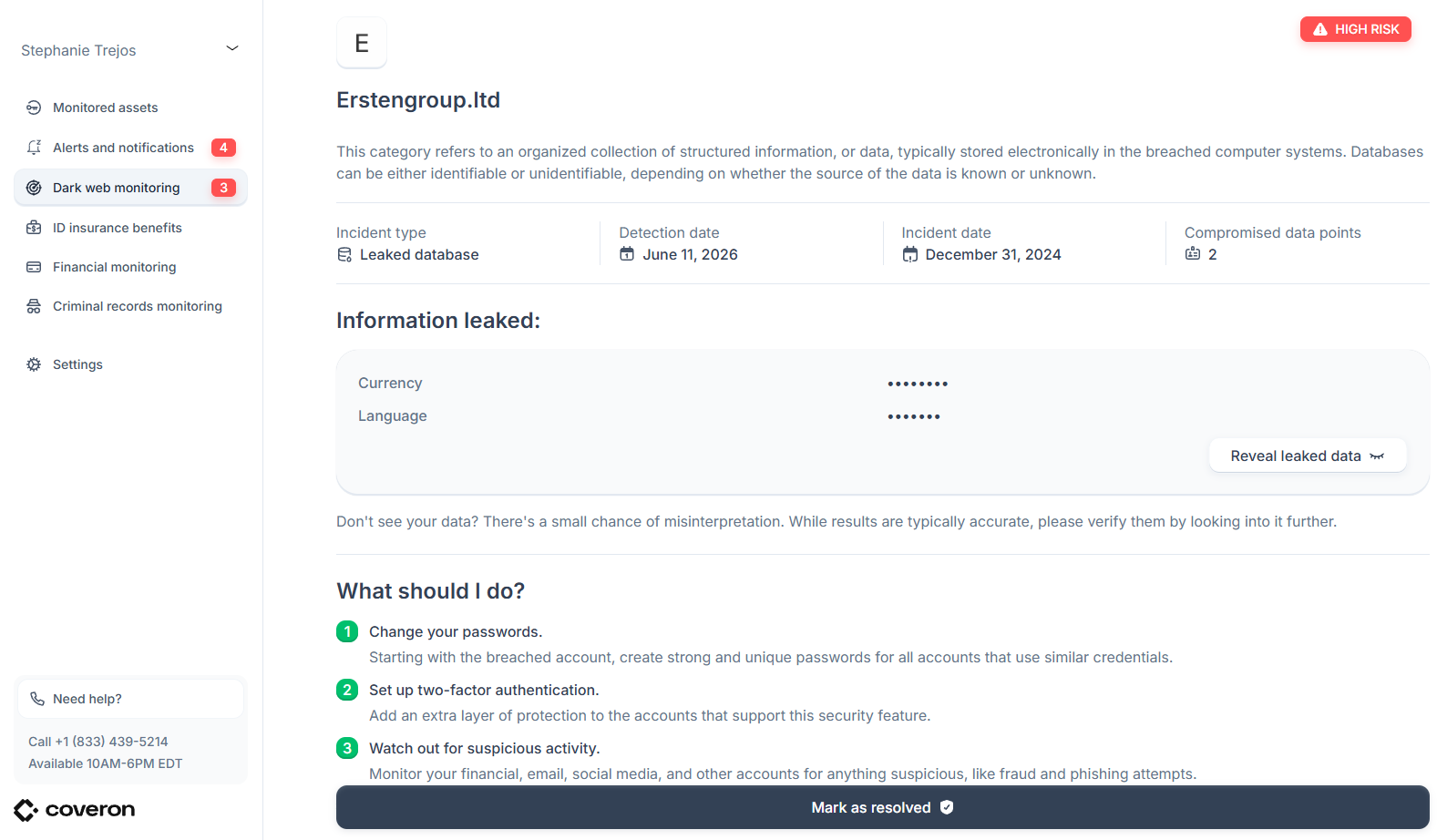
Dedicated data breach tracker shows where monitored information has been exposed

-
Full Protection adds NordVPN, Threat Protection Pro, and Incogni data removal
-
Full Couple Protection covers two adults and all children; Full Family Protection covers five adults and all children

-
Total and Ultra plans add three-bureau credit monitoring and financial account monitoring
-
Password manager and safe browsing tools included, with more advanced monitoring on higher tiers

-
Monitors payday loans, subprime lending, and other signs of financial fraud
-
Includes identity theft insurance and lost wallet assistance
Why You Can Trust Our Identity Theft Protection Reviews
We check each service's credit monitoring, Social Security number alerts, dark web monitoring, and financial account monitoring. We also compare insurance coverage and family plan options. Advertisers have no say in our ratings.
The best identity theft protection services compared
Compare our top identity theft protection services by price, credit monitoring, family coverage, and insurance. Some features are available only on higher-tier plans, so check the plan details before subscribing.
 Aura |
 LifeLock |
 OmniWatch |
 Coveron |
 Identity Guard |
 IDShield |
|
| Details | View Deal | View Deal | View Deal | View Deal | View Deal | View Deal |
| Best for | Best overall | Comprehensive monitoring | Scam protection | Online privacy | Best value | Identity restoration |
| Price range | $9.00–$30.00/mo | $10.42–$74.99/mo | $7.99-$29.99/mo | $4.99-$30.49/mo | $7.50–$39.99/mo | $14.95–$34.95/mo |
| Family protection | Family plans with child monitoring and parental controls | Family plans available | Multi-person plans available | Full Couple Protection: 2 adults and children; Full Family Protection: 5 adults and children | Family plans available | Family plans available |
| Credit monitoring | 3 bureaus on all plans | 2 bureaus on Core; 3 on Advanced and Total | 1 bureau on Standard; 3 on Elite and Family | 1 bureau on individual identity plans; 3 on couple and family plans | 3 bureaus on Total and Ultra | Credit monitoring available |
| Identity theft insurance | Up to $1 million | Up to $3 million | Up to $4 million | Up to $2 million | Up to $1 million | Up to $3 million |
| Standout feature | Identity and credit monitoring plus cybersecurity tools | Specialized financial and account takeover monitoring | Scam scanner for suspicious messages and links | NordVPN and Incogni with Full Protection | Affordable entry-level monitoring | Restoration by licensed private investigators |
| Learn more | Read Aura review | Read LifeLock review | Read OmniWatch review | Read Coveron review | Read Identity Guard review | Read IDShield review |
Aura: Best overall identity theft protection
Aura is our best overall choice for individuals and families who want comprehensive identity protection without navigating complicated feature tiers. Every plan includes identity monitoring, three-bureau credit monitoring, restoration support, and cybersecurity tools, with individual plans starting at $9.00/mo.
Choose Aura if you want to protect your credit, financial accounts, and devices under one subscription. LifeLock offers some monitoring categories Aura lacks, but Aura includes its core protections on every plan.

-
ID theft protection that monitors your SSN, bank accounts, credit cards, and brokerage and retirement accounts for suspicious activity
-
Every plan includes the full feature set, so no additional cost to unlock monitoring, insurance, or restoration
-
Bundles data removal with identity theft protection, antivirus, VPN, and a password manager in one subscription
What I liked
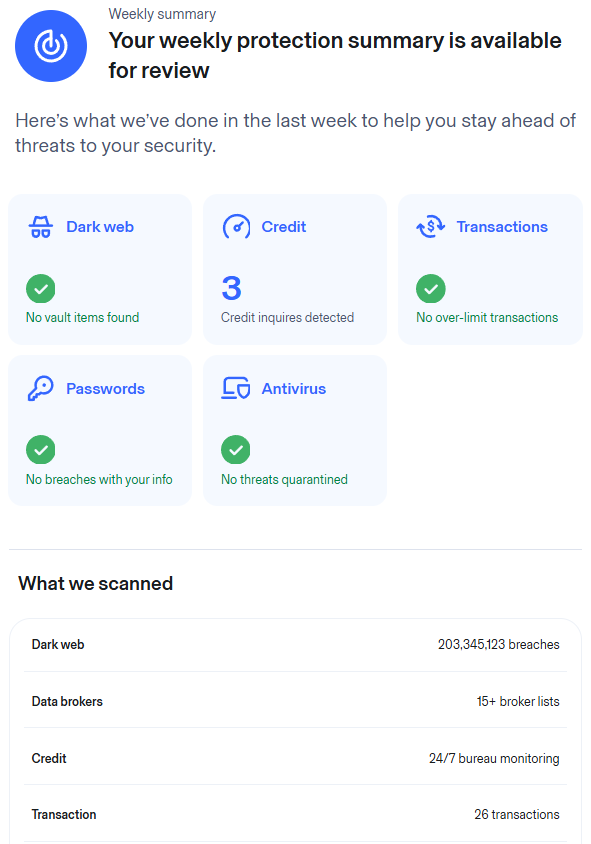
Robust identity theft protection: Aura monitors your Social Security number (SSN), property titles, bank transactions, and other personal and financial information for potential signs of identity theft. Combined with three-bureau credit monitoring on every plan, this gives you a broader view of suspicious activity without having to upgrade for essential coverage. Family plans also include monitoring for children's personal information.
Ease of use: During testing, I found Aura's dashboard intuitive, with clear monitoring tabs and alerts prominently displayed on the main screen. I also liked that Aura AI monitors financial activity and flags spending outside your usual patterns, which may help you spot unauthorized transactions sooner.
Complete cybersecurity suite: All plans include data removal, antivirus software, a VPN, ad and tracker blocking, and a password manager. These tools are convenient if you want to manage multiple security needs through one subscription.
Also won:
- Best for families: Aura Parental Controls allow parents to set screen time limits, view browsing history, and receive alerts about potential cyberbullying or scams. Family plans also include Safe Gaming and child SSN monitoring. Unlike adult credit monitoring, which tracks changes to existing credit reports, child identity monitoring helps detect signs that someone may be misusing a child's personal information to commit fraud. Our analysis of FBI data found that Americans under 18 filed 11,092 cybercrime complaints in 2025 and lost $11.1 million.
- Best for credit monitoring: Every Aura plan includes three-bureau credit monitoring, monthly VantageScore credit scores, and an Experian credit lock for adults. That makes Aura especially compelling for families who want comprehensive adult credit monitoring alongside child identity protection without upgrading to unlock three-bureau monitoring.
What I didn’t like
No social media monitoring: Aura doesn't monitor social media accounts for suspicious activity. If that's a priority, LifeLock or Identity Guard Ultra may be a better fit.
Limited customization of cybersecurity tools: Our testing found that Aura's VPN has a simple on/off toggle without server selection. Its password manager limits password sharing to family members on the plan and doesn't offer digital legacy features. These limitations matter more if you're looking to replace dedicated VPN or password manager software.
Star rating summary
Aura earned a high star rating of 4.8 based on our experience with the service, its pricing options, and its customer support methods.
Aura received a lower score in the features category because it lacks social media monitoring and data breach alerts.
| Decision factor | Weight | Verdict |
| Our experience | 20% | 5.0 |
| Value | 25% | 5.0 |
| Features | 45% | 4.67 |
| Customer service | 10% | 5.0 |
LifeLock: Best for comprehensive monitoring
LifeLock is our runner-up for readers who want specialized monitoring across financial accounts, social media, credit, and other potential signs of fraud. It stands out for features such as phone takeover monitoring, buy now pay later alerts, and utility account creation monitoring.
LifeLock Total offers up to $3 million in identity theft insurance per adult, but the most comprehensive financial and credit monitoring features require higher-priced plans. Choose LifeLock if monitoring breadth is your priority, especially if you're willing to upgrade for advanced protection. For a closer look at the trade-offs, see our Aura vs. LifeLock comparison.

-
ID theft protection with U.S.-based restoration specialists and data removal services
-
At least $1.05 million in ID theft insurance on every plan, with the Total plan covering up to $3 million
-
Three-bureau credit monitoring available on Advanced and Total tiers
What I liked
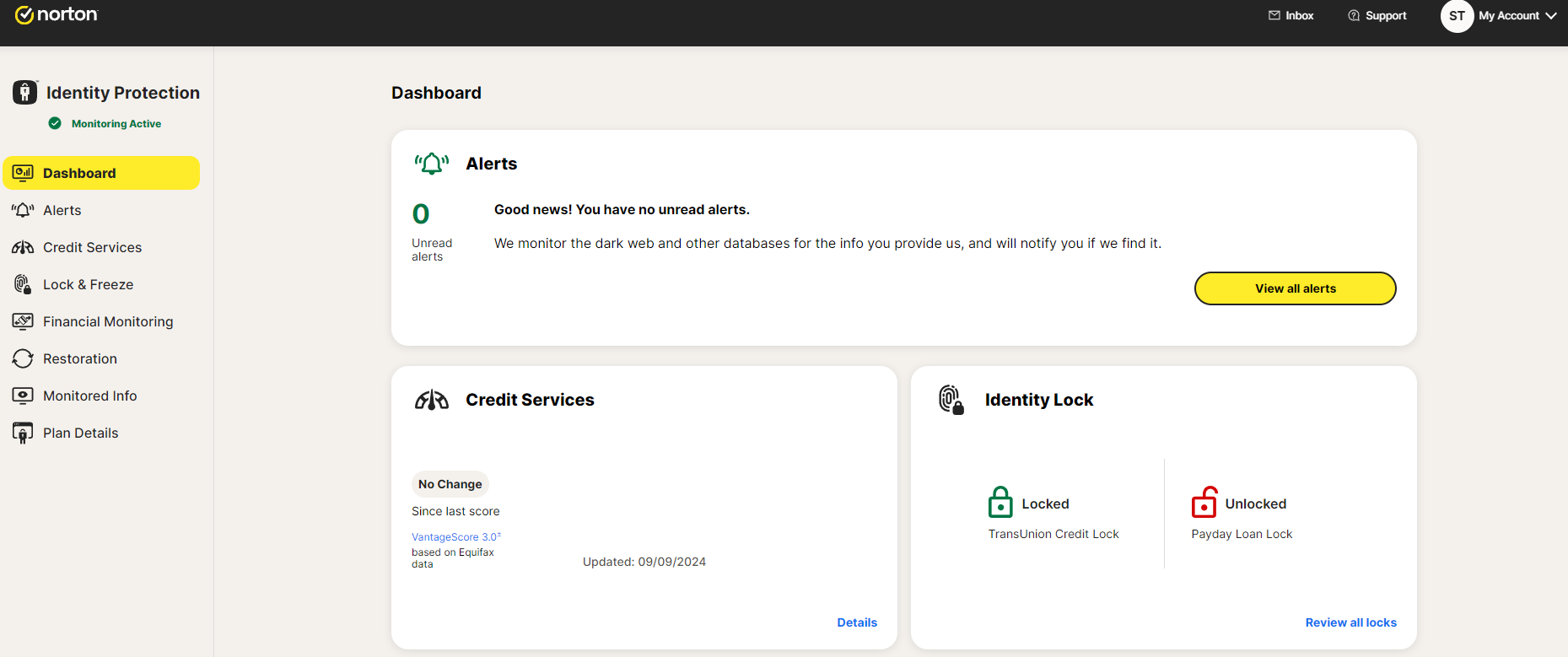
Comprehensive identity monitoring: LifeLock monitors a broad range of personal and financial activity, including social media, phone takeovers, buy now pay later accounts, home titles, and investments. Some of these features require higher-tier plans. During testing, we found its dashboard well organized, with separate areas for alerts, credit monitoring, restoration, and monitored information. That organization helps make its extensive monitoring features easier to navigate.
Extensive financial and credit monitoring: LifeLock Core includes two-bureau credit monitoring, while Advanced and Total offer three-bureau monitoring. Financial account coverage also expands by tier. Core is a reasonable starting point for basic monitoring, but Advanced and Total are better suited to readers who want broader credit and financial protection.
High identity theft insurance: LifeLock Total includes up to $3 million in identity theft insurance per adult, with separate limits for eligible stolen funds, expenses, and lawyers or experts. Our analysis of FBI data found that adults 60 and older lost an average of $37,904 per cybercrime complaint in 2025.
Also won:
- Best for Norton users: LifeLock can be bundled with other Norton security software. Our testing of Norton 360 antivirus and Norton Secure VPN found useful security capabilities, making a bundle worth considering if you already use Norton products.
What I didn’t like
Features vary by plan: Core doesn't include the same credit and financial account monitoring as Advanced or Total. Home title monitoring, investment alerts, and other advanced protections require Total. That means the lowest advertised price may not reflect the cost of the monitoring that makes LifeLock stand out, and comparing plans takes more effort than it does with Aura.
Star rating summary
LifeLock earned a 4.8 star rating as one of the more comprehensive identity theft protection services on the market. It includes monitoring that spans SSN, dark web, social media, credit, home title, and phone takeover, plus automatic data broker removal every 90 days included on every plan.
LifeLock lost points in the value category because many of its best features are gated behind the most expensive tier. Home title monitoring, phone takeover alerts, and investment account monitoring are available on the Total plan only, and three-bureau credit monitoring requires at least the Advanced plan.
| Decision factor | Weight | Verdict |
| Our experience | 20% | 5.0 |
| Value | 25% | 4.3 |
| Features | 45% | 5.0 |
| Customer service | 10% | 5.0 |
OmniWatch: Best for scam protection
OmniWatch is best for readers who frequently encounter suspicious messages, emails, and links and want help identifying potential scams. Its Scam Protection tool lets you submit questionable content for analysis alongside standard identity and dark web monitoring.
OmniWatch's Elite plan offers up to $100,000 in scam and ransomware protection. However, it doesn't provide the same depth of financial account or social media monitoring as LifeLock. Choose OmniWatch for scam detection, but choose Aura or LifeLock for more comprehensive identity monitoring. For a closer look at how OmniWatch's scam detection compares with Aura's broader identity monitoring and cybersecurity tools, see our OmniWatch vs. Aura comparison.

-
ID theft protection service with up to $2M in insurance on the Standard plan and up to $4M on the Elite plan
-
Elite plan adds up to $100K in scam and ransomware protection, plus dedicated scam resolution specialists
-
Scans texts, emails, URLs, and images you upload to flag potential scams and phishing emails
What I liked
Scam protection features: OmniWatch's Scam Protection tool analyzes suspicious texts, emails, URLs, QR codes, and images. During testing, we appreciated being able to check several types of questionable content through one tool rather than relying on separate services. You can also connect a Gmail account so OmniWatch can automatically scan incoming emails for potential phishing attempts.
Ransomware and scam protection insurance: Elite includes up to $100,000 in protection for eligible scam and ransomware losses. This is a meaningful difference because standard identity theft insurance doesn't necessarily cover money voluntarily sent to a scammer. Our analysis of FTC data found that Americans lost $2.05 billion to social media fraud in 2025.
Scam protection app for mobile: OmniWatch's Scam Protection Center is also available in its mobile app, so you can check suspicious messages and links when you're away from your computer. This makes its scam detection tools particularly practical for everyday use.
Also won:
- Best for individuals focused on scams: OmniWatch combines scam detection with identity and dark web monitoring. Compare the plans in our OmniWatch pricing guide before choosing a subscription.
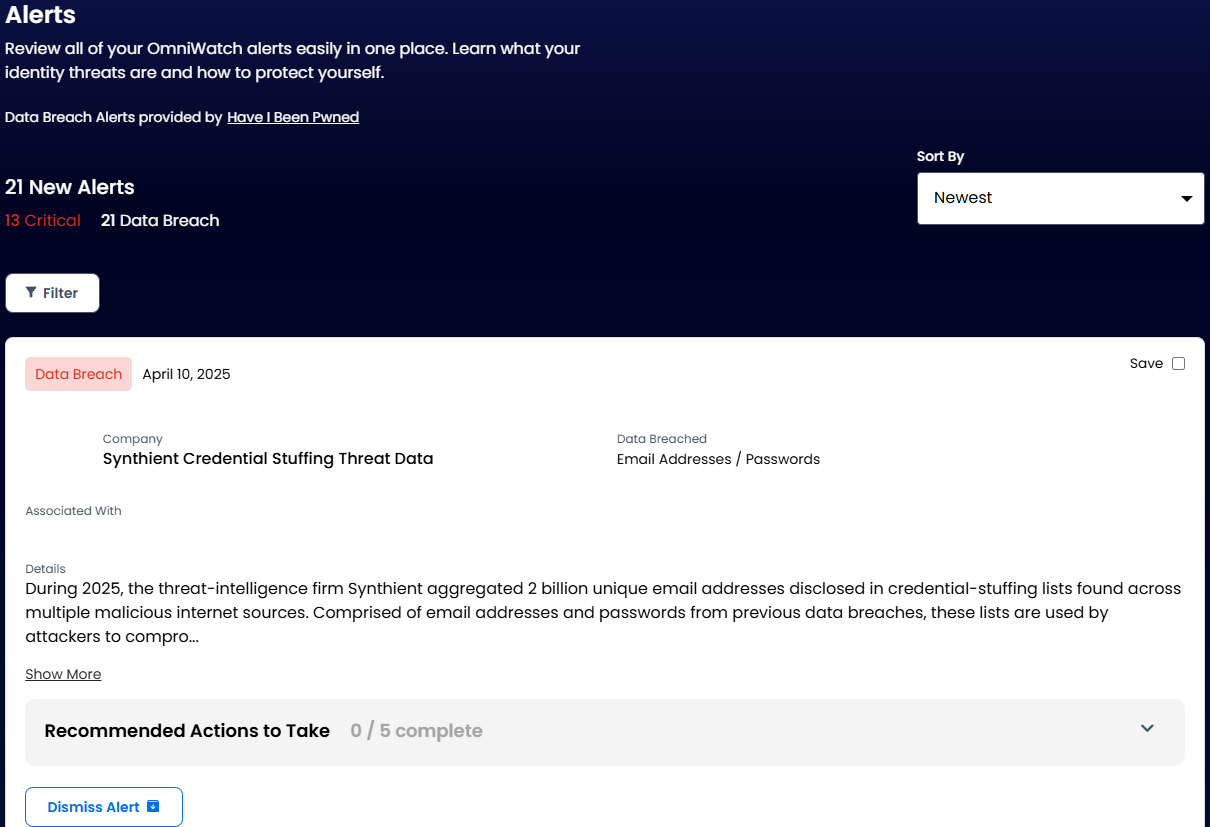
- Best for data breach tracking: Its dedicated breach tracker makes it easy to review exposed information. This complements its dark web monitoring.
What I didn’t like
Lack of advanced monitoring: OmniWatch doesn't offer LifeLock's breadth of specialized financial account and social media monitoring. Aura also provides more comprehensive identity and three-bureau credit monitoring. OmniWatch makes more sense if identifying scams is your primary concern rather than monitoring every aspect of your identity and finances.
Star rating summary
OmniWatch earned a star rating of 4.5 based on its feature set, identity theft insurance, and customer support. It excels at scam protection, offering built-in tools that help detect phishing attempts, even on mobile devices.
OmniWatch received a lower score in the value category because it can be more expensive than its competitors and there are no plans that include coverage for children.
| Decision factor | Weight | Verdict |
| Our experience | 20% | 4.5 |
| Value | 25% | 4.0 |
| Features | 45% | 4.5 |
| Customer service | 10% | 5.0 |
Coveron: Best for online privacy
Coveron is best for readers who want identity protection alongside tools that help secure their browsing and remove personal information from data brokers. Developed by Nord Security, Coveron offers identity monitoring, online fraud insurance, and higher-tier bundles with NordVPN and Incogni.
Coveron's individual plans start with Scam Protection, while Identity Theft Protection adds financial account monitoring, one-bureau credit monitoring, and identity theft insurance. Full Protection adds NordVPN, Threat Protection Pro, and Incogni. If you need coverage for multiple people, Full Couple Protection and Full Family Protection include three-bureau credit monitoring for adults.
Choose Coveron if online privacy, fraud coverage, and bundled security tools matter most. Aura and LifeLock remain stronger choices for broader identity monitoring.

-
ID theft protection with up to $2M in identity theft insurance, starting at $4.99/mo
-
Identity Theft Protection and higher plans add $50K in cyber extortion insurance and $25K in home title insurance
-
Dark web monitoring on every plan, with credit monitoring and a VPN on mid-tier plans and up
What I liked
Flexible identity and fraud protection: Coveron lets you choose between scam-focused coverage and more comprehensive identity protection. Scam Protection includes dark web monitoring, malware breach alerts, up to $100,000 in online fraud insurance, and up to $10,000 in cyberattack insurance. Identity Theft Protection adds criminal records monitoring, one-bureau credit monitoring, short-term loan monitoring, financial account monitoring, and up to $2 million in identity theft insurance. This flexibility is useful if you don't want to pay for a larger security bundle.
NordVPN and Threat Protection Pro: Coveron Full Protection includes NordVPN and Threat Protection Pro. We've tested both tools, and our testing found Threat Protection effective at blocking malware and phishing websites. Combining these tools with identity monitoring makes Coveron particularly appealing if you also want to secure your browsing.
Incogni data removal: Full Protection also includes Incogni, which sends removal requests to 420+ data brokers. Our testing found Incogni easy to use. Having data removal, VPN protection, and identity monitoring in one bundle is Coveron's clearest advantage over services that focus primarily on detecting fraud after your information has been exposed.
Also won:
- Best for online fraud coverage: Scam Protection includes up to $100,000 in online fraud insurance and $10,000 in cyberattack insurance. Identity Theft Protection and Full Protection also include up to $100,000 in cyberextortion insurance and $100,000 in home title insurance, alongside identity theft coverage.
- Best for privacy-focused families: Full Couple Protection covers two adults and all children, while Full Family Protection covers five adults and all children. Both include three-bureau credit monitoring for adults, financial account monitoring, NordVPN, and personal data removal services.
What I didn’t like
Limited credit monitoring on individual plans: Identity Theft Protection and individual Full Protection include only one-bureau credit monitoring. Three-bureau monitoring is available on Full Couple Protection and Full Family Protection, so individuals who want comprehensive credit monitoring may find Aura's plans more straightforward. Scam Protection doesn't include the same identity and financial monitoring features as the higher tiers.
Less comprehensive identity monitoring: Coveron lacks some of the specialized monitoring offered by LifeLock, including social media and phone takeover alerts. If your main priority is detecting a wide range of identity and financial fraud rather than bundling privacy tools, Aura or LifeLock may be a better fit.
Star rating summary
Coveron earns a 4.5 rating for offering a clean user experience and unusually strong insurance coverage for a single-user identity protection service. Plans include dark web monitoring, credit monitoring, and up to $2 million in identity theft insurance.
It’s best for people who want monitoring plus financial protection rather than advanced score insights or family-focused features.
| Decision factor | Weight | Verdict |
| Our experience | 20% | 5.0 |
| Value | 25% | 4.7 |
| Features | 45% | 4.7 |
| Customer service | 10% | 4.0 |
Identity Guard: Best value identity theft protection
Identity Guard is best for budget-conscious readers who want essential identity monitoring at a lower starting price, with the option to upgrade for more comprehensive coverage. Owned by Aura, Identity Guard offers dark web monitoring, identity theft insurance, and online safety tools.
Its Value plan is best for basic identity monitoring, while Total and Ultra add three-bureau credit monitoring and more financial protection. Choose Identity Guard if you don't need Aura's full security suite, but compare the higher-tier prices before assuming it's the better deal. For a closer look at whether Identity Guard's lower-cost plans are worth the trade-offs compared with Aura's broader protection, see our Identity Guard vs. Aura comparison.

-
ID theft protection for individuals starting at $7.50/mo, with $1M insurance and dark web monitoring included
-
Monitors bank accounts, 401(k)s, investments, home title, and social media, with coverage expanding by plan tier
-
Password manager and safe browsing included on every plan, alongside identity monitoring tools
What I liked
Affordable entry-level monitoring: Identity Guard's Value plan includes dark web monitoring, data breach notifications, identity theft insurance, and online safety tools. It's a practical starting point if you're primarily concerned about exposed personal information and don't need comprehensive credit monitoring. If you want three-bureau credit monitoring or financial account alerts, however, you'll need Total or Ultra.
Advanced protection on higher tiers: Total adds three-bureau credit monitoring and financial account monitoring. Ultra expands coverage with social media and home title monitoring and white-glove fraud remediation. This tiered approach lets you pay for more extensive protection when you need it, although the higher plans narrow Identity Guard's value advantage over Aura.
Easy-to-use online protection tools: During testing, we liked Identity Guard's clean dashboard and straightforward monitoring settings. Its password manager and safe browsing features add useful protection without making the service feel overly complicated, although they don't replace Aura's broader cybersecurity suite.

Also won:
- Best budget-friendly Aura alternative: Identity Guard shares some of Aura's monitoring capabilities, while Ultra includes social media monitoring and a personalized Risk Management Score. Read our Aura alternatives guide for other options.
What I didn’t like
Limited family protection extras: Identity Guard offers family coverage, but it doesn't include Aura's parental controls, Safe Gaming, and other child safety features. Families looking for both identity monitoring and tools to manage children's online activity may get more from Aura.
White-glove restoration requires Ultra: Identity Guard reserves its most extensive, personalized fraud remediation for the Ultra plan. If you want a specialist to help manage the recovery process rather than relying on more basic assistance, compare Ultra with Aura and IDShield before subscribing.
Star rating summary
Identity Guard earned a 4.6 star rating for its affordable pricing, multiple monitoring features, and several ways to contact customer support.
Identity Guard received a lower experience score because its starter plan has large gaps in protection. Its restoration services are also limited to its highest-tier plans.
| Decision factor | Weight | Verdict |
| Our experience | 20% | 4.5 |
| Value | 25% | 4.7 |
| Features | 45% | 4.7 |
| Customer service | 10% | 5.0 |
IDShield: Best for identity restoration
IDShield is best for readers who prioritize personalized assistance if their identity is stolen. Its standout feature is access to licensed private investigators who help with identity restoration.
IDShield also offers financial fraud monitoring and up to $3 million in identity theft insurance. However, its credit reporting tools are less comprehensive than Aura's. Choose IDShield for hands-on recovery support, but choose Aura if three-bureau credit monitoring is a higher priority. For a closer look at IDShield's hands-on restoration services versus Aura's comprehensive monitoring and cybersecurity tools, see our IDShield vs. Aura comparison.

-
ID theft protection with $3M in insurance on every plan, plus dedicated licensed private investigators
-
Dark web, social media, bank, credit card, and crypto wallet monitoring all included on every plan
-
Bundles Trend Micro antivirus, a VPN, and a password manager alongside identity protection tools
What I liked
Dedicated identity restoration: IDShield provides access to licensed private investigators who help members work through identity theft recovery. That hands-on assistance can be especially valuable if you're dealing with fraudulent accounts, inaccurate records, or multiple organizations that need to be contacted. Instead of navigating the recovery process entirely on your own, you have an experienced professional to help you address the damage.
IDShield also provides identity theft insurance, with coverage up to $3 million, and assistance with lost or stolen wallets.
Advanced financial monitoring: IDShield monitors payday loans, subprime lending, high-risk applications, and other potential signs of financial fraud. These categories are useful because identity theft doesn't always involve a conventional credit card or bank account, and suspicious activity involving alternative lenders might otherwise be overlooked.
Device protection: IDShield includes tools such as a VPN, password manager, malware protection, and login credential monitoring. These complement its monitoring and restoration services, although the personalized recovery assistance remains its strongest selling point.

Also won:
- Best for online reputation protection: IDShield includes reputation management tools that can help you review social media activity and identify older accounts or personal information online.
What I didn’t like
Limited credit report access: IDShield provides credit monitoring and scores but doesn't offer the same three-bureau credit report access as Aura. If you want more comprehensive credit monitoring and reporting tools in one service, Aura may be a better fit. You can also request free credit reports separately through AnnualCreditReport.com.
Star rating summary
IDShield has a high star rating of 4.5 due to its extensive protection features available across plans and user-friendly interface.
IDShield received a lower score in the features category because it doesn't include credit reports, but it does guide you on how to access them. IDShield also received a lower score in the customer service category because its phone support isn't 24/7.
| Decision factor | Weight | Verdict |
| Our experience | 20% | 5.0 |
| Value | 25% | 4.3 |
| Features | 45% | 4.2 |
| Customer service | 10% | 4.0 |
How do identity theft protection services compare on monitoring and recovery?
Identity theft protection services differ in what they monitor and how they help when something goes wrong. Some focus on detecting suspicious financial activity, while others offer scam detection, cybersecurity tools, or hands-on identity restoration services. Here's how our six picks compare beyond their core credit monitoring and insurance benefits.
Aura |
LifeLock |
OmniWatch |
Coveron |
Identity Guard |
IDShield |
|
| Financial account monitoring | Included; coverage expands by plan | Identity Theft Protection and Full Protection plans | Total and Ultra | |||
| Social media monitoring | Ultra | |||||
| Scam and fraud protection | AI-powered spam call and message protection | Scam assistance and reimbursement on qualifying plans | Scam scanner; up to $100,000 in scam and ransomware protection on Elite | Scam Protection includes online fraud and cyberattack insurance; Identity Theft Protection adds broader coverage | Safe browsing and fraud alerts | Fraud monitoring and recovery assistance |
| Identity restoration services | White-glove fraud resolution and 24/7 specialist support | U.S.-based restoration specialists | Dedicated identity restoration agents | Identity restoration assistance starting with Identity Theft Protection | White-glove fraud remediation on Ultra | Licensed private investigators and 24/7 emergency assistance |
| Security and privacy extras | Antivirus, VPN, password manager, data removal, and parental controls on family plans | Automatic data removal; Norton security bundles sold separately | Scam scanner, VPN, antivirus, and ad blocker | Full Protection includes NordVPN, Threat Protection Pro, and Incogni | Password manager and safe browsing tools | VPN, password manager, device protection, and reputation management |
| Details | View Deal | View Deal | View Deal | View Deal | View Deal | View Deal |
What should you look for in identity theft restoration services?
Identity monitoring helps detect potential fraud, but identity theft restoration services help you recover after your information has already been misused. Depending on the provider, restoration specialists may help you dispute fraudulent accounts, contact creditors, place fraud alerts, and work through the steps needed to restore your identity.
Identity theft insurance serves a different purpose. It may reimburse eligible stolen funds or recovery expenses, but it doesn't necessarily mean someone will handle the recovery process for you. Coverage also varies by policy, and advertised maximums may combine separate benefit limits.
If hands-on assistance is your priority, IDShield stands out for its licensed private investigators. Aura is a strong alternative if you want restoration support alongside comprehensive monitoring, while Identity Guard reserves its white-glove fraud remediation for Ultra.
For a closer look at what insurance may reimburse, see our guide to identity theft insurance.
What is identity theft?
Identity theft is a crime in which someone obtains and uses another person's personal information without permission, often to commit fraud or seek financial gain. Some common types of identity theft include:
- Tax identity theft
- Medical identity theft
- Ghosting identity theft
- Child identity theft
- Employment identity theft
Identity theft is becoming more common as more of our information is accessible online. In fact, our 2026 analysis of FTC data found that identity theft reports per capita rose in 45 states in 2025, with Mississippi up 53% year over year. Identity thieves often obtain personal information through phishing scams, data breaches, malware, discarded documents, stolen wallets, or stolen mail.
Identity theft can lead to significant financial loss, credit damage, and other problems. Identity theft protection and credit monitoring services may help you spot suspicious activity and respond.
Do I need identity theft protection?
Identity theft protection may be worth the cost if you want ongoing monitoring and recovery support. Losses are climbing fast. Our analysis of FBI data found that government impersonation scams cost Americans $798 million in 2025, up 96.7% from the year before, with victims losing an average of $24,610 per complaint.

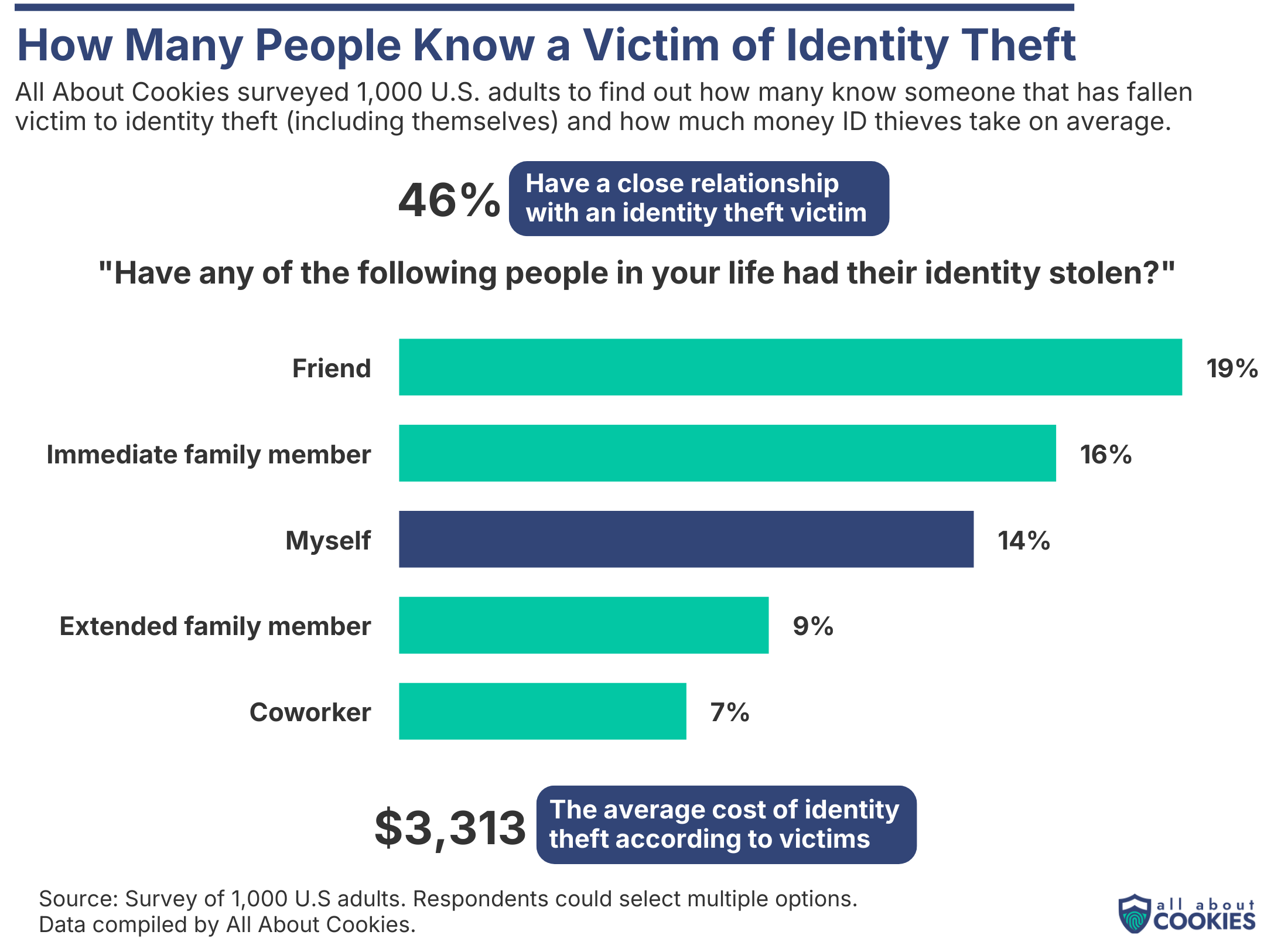
Recovery can take a while, too. In our 2024 survey of 1,000 U.S. adults, victims lost $3,312 on average to identity theft, and 23% said they were still dealing with repercussions months or years later.
In 2025, people reported losing about $16 billion to fraud, the highest total the Federal Trade Commission (FTC) has on record and an increase of about 25% over 2024. Imposter scams were the most reported fraud category, accounting for nearly one in three reports and $3.5 billion in losses.
Identity theft protection services offer many benefits. Depending on the plan, an identity theft protection service may monitor databases and the dark web for signs that someone is misusing your personal information. It may alert you to potential threats and help you recover after identity theft. Some plans also monitor a child’s personal information for fraudulent use.
Keep in mind, though, that no service can completely prevent identity theft. You may find these services too expensive. But, considering the potentially severe consequences of identity theft, many find these services a worthwhile investment.
How does identity theft protection work?
Identity theft protection services monitor selected credit, public-record, and online sources for signs that someone may be misusing your personal information. They alert you to suspicious activity and may provide assistance if your identity is stolen. Common features include:
- Credit monitoring: Services monitor credit reports from Experian, TransUnion, and Equifax for changes that could indicate fraud. Some plans monitor only one or two bureaus, while others cover all three. Three-bureau monitoring provides broader visibility because activity may appear on one bureau's report but not another.
- Dark web monitoring: Services scan the dark web and other sources for exposed personal information, such as email addresses, passwords, and Social Security numbers.
- Public record monitoring: Some services check court records, address changes, property records, and other public information for suspicious activity. Home title monitoring isn't included with every plan.
- Identity restoration services: Recovery specialists may help you dispute fraudulent accounts, contact creditors, and resolve problems caused by identity theft. The level of hands-on assistance varies by provider and plan.
- Identity theft insurance: Many services include identity theft insurance for eligible recovery expenses or stolen funds. Coverage limits and exclusions vary, and not every type of scam loss qualifies.
- Credit locks and freezes: A credit freeze restricts access to your credit report for most new credit applications. You can place one for free directly with each major credit bureau. Some paid protection plans also provide credit lock tools.
- Additional cybersecurity tools: Some plans include antivirus software, VPNs, password managers, scam scanners, or data removal services to help reduce your exposure to online threats.
These tools can help you identify and respond to fraud, but no identity theft protection service can prevent every form of identity theft. You should still review your financial accounts, use strong passwords, and consider freezing your credit when you're not applying for new accounts.
How much does identity theft protection cost?
Identity theft protection plans can cost from less than $10 to more than $70 per month. Your price depends on the provider, plan, billing term, and number of people covered. Introductory prices may also differ from renewal rates.
- Are you seeking an individual, couple, or family plan?
- Can you commit to an annual subscription, or would you prefer monthly billing?
- Do you want identity monitoring alone or additional cybersecurity tools?
- Do you need three-bureau credit monitoring, scam coverage, or specialized identity restoration?
Use the table below to compare starting prices. For Coveron and Identity Guard, family coverage is available even though the original table listed it as unavailable.
| Individual starting price | Family starting price | |
| Aura | $9.00/mo | $17.00/mo |
| LifeLock | $10.42/mo | $30.00/mo |
| OmniWatch | $7.99/mo | $19.99/mo |
| Coveron | $4.99/mo | Full Couple Protection and Full Family Protection available; see current offer pricing |
| Identity Guard | $7.50/mo | Family plans available; see current offer pricing |
| IDShield | $14.95/mo | $29.95/mo |
| IdentityForce | $16.66/mo | $20.83/mo |
| Complete ID | $8.99/mo | $11.98/mo |
| IdentityIQ | $7.44/mo | $27.00/mo |
| Zander Identity Theft Protection | $6.25/mo | $12.08/mo |
How to choose the best identity theft protection service
The best identity theft protection service for you depends on what you want monitored, how much recovery assistance you need, and whether you're protecting yourself or your family. Before subscribing, compare these factors:
- Identity and financial monitoring: Look beyond basic dark web alerts. If you're concerned about financial fraud, compare bank account monitoring, investment account alerts, payday loan monitoring, and account takeover protection. LifeLock is particularly strong in specialized monitoring, although coverage depends on the plan.
- Credit monitoring: Check whether the plan monitors one, two, or all three credit bureaus. Also compare how frequently you receive credit scores and whether you can access full credit reports. Aura includes three-bureau monitoring on all plans, while LifeLock, Coveron, and Identity Guard vary by tier.
- Family and child protection: If you're protecting a household, check how many adults and children are covered and whether child identity monitoring is included. The risks of child identity theft differ from adult credit fraud because children may not have established credit histories. Family plans with parental controls can provide additional benefits, but those tools aren't included with every service.
- Identity restoration and resolution services: Look for dedicated specialists who can help you resolve fraudulent accounts and recover your identity. IDShield provides licensed private investigators, while Aura offers white-glove fraud resolution. Identity Guard's white-glove remediation is available on Ultra.
- Insurance and scam coverage: Compare eligible stolen-funds reimbursement, recovery expenses, and any separate scam or cyberattack benefits. A large advertised insurance limit doesn't necessarily mean every loss is covered. Read the policy terms before subscribing.
- Cybersecurity and privacy extras: Decide whether you need antivirus software, a VPN, password manager, scam scanner, or data removal service. Aura bundles several security tools, while Coveron Full Protection includes NordVPN, Threat Protection Pro, and Incogni.
- Price and subscription terms: Compare the cost of the plan that actually includes the features you want, not just the lowest advertised price. Check introductory rates, renewal pricing, billing terms, and family-plan costs.
- Ease of use and privacy: Look for clear alerts, an accessible dashboard or mobile app, responsive customer support, and a privacy policy you're comfortable with. A monitoring service requires sensitive information to work, so understanding how the provider handles that data is important.
If you're unsure whether a subscription is necessary, our guide to whether identity theft protection is worth it can help you weigh paid monitoring and recovery assistance against free protective measures.
Advice from the experts
Understanding current identity theft risks is an important first step in protecting your identity online. The All About Cookies team consulted a panel of experts to explain those risks and the current state of identity theft.
Click below to see expert opinions on the following questions:
- What are the most dangerous consequences of having your identity stolen?
- What newer scams should consumers watch for?
- What does the future of identity theft scams look like?
- What long-term solutions could reduce risk for consumers?


Bottom line: The best ID theft protection services of 2026
Aura is the best identity theft protection service for most people because it combines comprehensive identity and three-bureau credit monitoring with restoration support and cybersecurity tools on every plan. It's especially compelling for families who also want child identity protection and parental controls.
If you want more specialized monitoring for financial accounts, social media, and phone takeovers, LifeLock is our runner-up. OmniWatch is worth considering if scam detection is your biggest concern, while Coveron, Identity Guard, and IDShield offer distinct advantages for online privacy, budget-friendly monitoring, and identity restoration.
Before subscribing, compare the features included in your specific plan, not just the advertised starting price. The cheapest tier may not include the credit monitoring, insurance benefits, or restoration assistance you need.
FAQs
Which identity theft protection is best?
Aura is the best identity theft protection service we've tested. It includes three-bureau credit monitoring, identity restoration assistance, and cybersecurity tools on every plan, making it our top choice for individuals and families.
LifeLock is our runner-up for its specialized financial, social media, and account takeover monitoring, although coverage varies by plan. OmniWatch ranks third for its scam detection tools, which help identify suspicious texts, emails, links, and other potential scams.
Is LifeLock worth getting?
LifeLock is worth considering if you want comprehensive identity theft monitoring, particularly for financial accounts, social media, phone takeovers, and other signs of fraud. It also provides identity restoration assistance and insurance coverage for eligible losses.
However, LifeLock's most advanced monitoring features require higher-tier plans. Core includes two-bureau credit monitoring, while Advanced and Total offer three-bureau monitoring. LifeLock can help you detect and respond to identity theft, but it can't prevent every instance of fraud. See our LifeLock price guide for more details.
Is LifeLock or Aura better?
Aura is better for most people because every plan includes three-bureau credit monitoring, identity restoration assistance, and cybersecurity tools such as antivirus software, a VPN, and a password manager. Its family plans also include child identity protection and parental controls.
LifeLock may be better if you want specialized monitoring for social media, phone takeovers, investments, and other financial activity. However, many of these features require higher-tier plans. See our Aura vs. LifeLock comparison for a detailed breakdown.
Will changing my name help with identity theft?
No, changing your name won't necessarily protect you from identity theft, as thieves can still access other personal information, like your Social Security number or birthdate. Instead, I recommend working with an identity theft protection provider that also offers identity restoration services.
How do I check to see if someone is using my Social Security number?
You can check for signs that someone is using your Social Security number (SSN) by reviewing your credit reports for unfamiliar accounts, loans, or credit inquiries. You can request free credit reports from all three major credit bureaus at AnnualCreditReport.com.
You should also review your Social Security earnings record through the Social Security Administration for unfamiliar employment activity. Identity theft protection services can alert you to certain signs of SSN misuse, but credit monitoring alone won't detect every type of fraud, including some employment or tax-related identity theft.
What's the difference between identity theft protection and credit monitoring?
Credit monitoring tracks changes to your credit reports, such as new accounts, credit inquiries, and other activity that could indicate fraud. Depending on the service, monitoring may cover one, two, or all three major credit bureaus.
Identity theft protection offers broader coverage, potentially including dark web monitoring, financial account alerts, Social Security number monitoring, and identity restoration assistance. Some plans also include identity theft insurance for eligible losses and recovery expenses. If you want protection beyond your credit reports, an identity theft protection service may be a better fit.
Can I get identity theft protection for my child?
Yes, several identity theft protection services offer family plans that cover children. Aura is our top choice because it combines child identity monitoring with parental controls and Safe Gaming. LifeLock also offers family plans with child identity protection, while Coveron's couple and family plans cover children.
Child identity monitoring helps detect potential misuse of a child's personal information, while adult credit monitoring tracks activity on established credit reports. Not every family plan includes parental controls or other online safety tools, so compare features and coverage limits before subscribing. See our recommendations for protection for your whole family.
What should I do if my identity is stolen?
If your identity is stolen, contact any affected banks, credit card issuers, or other companies immediately to report fraudulent activity and secure your accounts. You should also place a free credit freeze with Equifax, Experian, and TransUnion to help prevent new accounts from being opened in your name. A fraud alert is another option that requires lenders to take extra steps to verify your identity.
Report the theft to the Federal Trade Commission (FTC) at IdentityTheft.gov to receive a personalized recovery plan. If you have identity theft protection, contact your provider to find out what restoration assistance is available. For more guidance, read our guide on how to tell if someone stole your identity.
How we test and rate identity theft protection services
Our team has conducted hands-on testing on 18 identity theft protection services using a consistent process. We sign up several days before formal testing begins, giving each service time to populate our dashboard with real monitoring data.
Then, we evaluate each product across six areas:
- Identity and credit monitoring (30%): We assess how comprehensive the service is, specifically checking for SSN monitoring, financial account monitoring, credit monitoring across all three bureaus, and more.
- Editor’s score (20%): We evaluate the service’s ease of use, security practices, the company’s breach history, and anything else that’s not addressed in the other categories.
- Value (15%): We compare the lowest and highest monthly plan prices against what’s actually included at each tier. We also check if the service offers a free trial.
- Basics (20%): We review how many adults and children can be covered, as well as the maximum identity theft insurance value offered.
- Customer service (10%): We determine if there are several options available for human support.
- Extras (5%): We check whether the service includes additional tools we find valuable: dark web monitoring, social media monitoring, data breach alerts, and lost wallet protection.
Each review’s star rating summary groups these six areas into four categories: Features (45%), Value (25%), Our experience (20%), and Customer service (10%). Features combines identity and credit monitoring, extras, and identity theft insurance. Value combines pricing with how many adults and children each plan covers.
We retest all identity theft protection services at least once a year. To learn more about how we test, read our full identity theft protection testing methodology here.
All identity theft protection services we've tested and reviewed
Our identity theft protection recommendations are based on hands-on testing, not just advertised features. The All About Cookies editorial team has tested 18 identity theft protection services, completing more than 50 tests across six rating categories. We evaluate essential protections like credit monitoring, Social Security number alerts, dark web monitoring, and financial account monitoring, along with identity theft insurance coverage, family plan options, and overall usability.
While only a selection of these identity theft protection services made our recommended lineup, we've tested and reviewed many more to understand how they compare. Explore our individual reviews below to see how each performed in our testing.
-
ID theft protection that monitors your SSN, bank accounts, credit cards, and brokerage and retirement accounts for suspicious activity
-
Every plan includes the full feature set, so no additional cost to unlock monitoring, insurance, or restoration
-
Bundles data removal with identity theft protection, antivirus, VPN, and a password manager in one subscription