120,000 Flock Cameras Track American Drivers, but You Can't Ask to Delete the Data
Your local police department may keep plate scans longer than Flock’s seven-day default.


Last updated Nov 10, 2026
All About Cookies is an independent, advertising-supported website. Some of the offers that appear on this site are from third-party advertisers from which All About Cookies receives compensation. This compensation may impact how and where products appear on this site (including, for example, the order in which they appear).
All About Cookies does not include all financial or credit offers that might be available to consumers nor do we include all companies or all available products. Information is accurate as of the publishing date and has not been provided or endorsed by the advertiser.
The All About Cookies editorial team strives to provide accurate, in-depth information and reviews to help you, our reader, make online privacy decisions with confidence. Here's what you can expect from us:
If a Flock Safety camera photographs your license plate, the company says it can’t process requests to view or delete the image. For a camera run by your local police department, the department controls the record and decides who can search it.
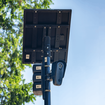
Flock’s network spans about 120,000 cameras across 49 states. Plaintiffs in a California lawsuit say the cameras generate 20 billion scans a month.[1]
“People have a right to know who is tracking their movements and what is being done with that information,” David Berger, an attorney for plaintiffs in two lawsuits against other license plate reader providers, said.
An officer can enter your plate number and pull up a record of where your car has been, even if you’ve never been pulled over.
Search for a plate, and the results can show where and when a car passed each camera.
The images can also capture details like a bumper sticker or a dent. If the same car passes the same cameras every weekday, those timestamps can show when it usually comes and goes.
A plate scan alone can’t tell police who was driving. How much of a trip officers can reconstruct depends on where the cameras are, which ones their department can search, and how long each agency keeps its records.
Two federal judges have reached different conclusions about warrantless use of Flock. A judge in Virginia sided with Norfolk over its use of the cameras, and that ruling is on appeal.
In Oklahoma, a judge found that a deputy’s search violated the Fourth Amendment and threw out the evidence it turned up.
The Washington Post found that some officers still had access after they left their jobs. One former Georgia investigator was charged with stalking his wife after allegedly using the system to track her.
In its privacy policy, Flock says it can’t verify the identity of the person associated with a plate image. Seven days for holding is the default under Flock’s evidence policy.
In its announcement about the change, Flock said existing customers would keep their approved retention periods.
Agencies can also preserve individual scans as evidence. The same announcement says Flock will require its law enforcement customers to use automated monitoring for unusual searches by year-end.
Search your city or police department’s website for “license plate reader” or “Flock transparency portal.”
Coon Rapids, Minnesota, for instance, says it keeps routine scans for 30 days and directs records requests through its existing procedures. Look for the sharing policy while you’re there. If it’s unclear, ask the department which other agencies can run searches and whether it limits what they can search for.
To find out whether the department has a scan of your car, ask its records office whether you can request records for your plate over a specific date range. That’s also where to ask if the agency accepts deletion requests. Whether you can get a copy depends on state law and the records the agency still holds.
A roadside camera can capture a plate as you drive by, much like Madison Square Garden’s facial recognition cameras can scan fans as they walk in.
Unfortunately, tools that help you remove your information from the internet or opt out of data brokers can’t erase a scan held by a police department.

 ID theft protection with U.S.-based restoration specialists and data removal services
At least $1.05 million in ID theft insurance on every plan, with the Total plan covering up to $3 million
Three-bureau credit monitoring available on Advanced and Total tiers