Kroger and Other Grocery Stores Admit to Scanning Your Face and License Plate
Some of that shopper data gets sold for marketing.


Last updated Nov 26, 2026
All About Cookies is an independent, advertising-supported website. Some of the offers that appear on this site are from third-party advertisers from which All About Cookies receives compensation. This compensation may impact how and where products appear on this site (including, for example, the order in which they appear).
All About Cookies does not include all financial or credit offers that might be available to consumers nor do we include all companies or all available products. Information is accurate as of the publishing date and has not been provided or endorsed by the advertiser.
The All About Cookies editorial team strives to provide accurate, in-depth information and reviews to help you, our reader, make online privacy decisions with confidence. Here's what you can expect from us:
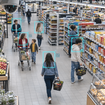
Your grocery store could collect personal information about you before you've even put anything in your shopping cart.
Kroger's privacy policy discloses that the grocery chain may collect facial recognition data at select stores and capture license plate information through its security cameras.[1]
A Nov. 24 report from Spectrum News 1 highlighted how retailers are increasingly using surveillance technologies to collect customer information, raising questions about how much shoppers know about the data being gathered during an ordinary grocery run.[2]
Brian Ray, co-interim dean at Cleveland State University College of Law, told Spectrum News 1 he's skeptical that this kind of data collection is primarily designed to help shoppers.
He said it's not unusual for retailers to keep customer data because it's valuable, and he pointed to Home Depot, Rite-Aid, and Walgreens as other chains that have installed camera systems for stated security reasons.
"When it comes to facial recognition, more often we are seeing examples where they are using it to create a list of people who are known shoplifters," Ray said.
Kroger's privacy policy confirms the company collects biometric information, including facial recognition data, but says this happens "in select locations only," for security purposes, to protect health and safety, and to prevent, investigate, and prosecute shoplifting, fraud, and other criminal activity.
The policy states Kroger provides notice at the point of entry in stores where biometric data is collected, and says the company does not collect biometric information in California. Some of its cameras, the policy adds, may also capture license plate data.
According to Ray, these kinds of shopper data programs didn't start out this way.
"When those programs first started, they primarily [served] to provide information to the grocery stores themselves," he said. "As we see in the case of Kroger, however, they have morphed to become an independent source of income where there is a resell of that data to other entities."
A May 2025 Consumer Reports investigation found that Kroger uses customer information to build detailed shopper profiles, including estimates of household income and predictions about which customers are likely to buy premium brands.
The company's precision marketing division generated an estimated $527 million in profit in 2024, according to investment banking firm Guggenheim Securities. That figure could reach $825 million in 2027.
Kroger discloses that it may sell or share several categories of personal information for targeted advertising, including purchase histories, personal identifiers, approximate location data and inferences drawn about customers.
Additionally, the company identifies security and crime prevention as the purposes behind its collection of facial recognition data.
Kroger frames the data collection as a benefit to shoppers, stating on its site that the purpose is to "save you time and money and to make your shopping experience better."
Ray isn't convinced that fully captures what's happening. "The information gathered gets put together to create a fairly detailed [picture] of most of us that's getting used in ways that we didn't expect," he said.
Kroger has also rolled out digital price tags, known as electronic shelf labels, at many of its locations. These let the company change prices automatically. Kroger has stated prices do not change based on surge or dynamic pricing.
Sean McCann of ACLU Ohio said the broader trend worries him regardless. "It seems to be kind of increasing where these companies are moving in terms of dynamic pricing or an incentive-based program," McCann said.
The ACLU has said private companies like Kroger have the legal right to collect this type of data, while raising concerns about how that data is shared once it's out of the store's hands.
Ray argued the patchwork of rules governing this kind of collection hasn't kept pace with the technology.
"We need laws that are going to protect us from the start and do it in a more systematic way, especially as AI makes the ability to collect and process data much more easy," he said.
Kroger isn't the only retailer monitoring shoppers in its parking lots. On Nov. 19, digital rights group Fight for the Future published a survey identifying nine of 10 major retailers as users of automated license plate readers, including Walmart, Costco, and Target.
None of this will stop a store from running cameras at its own entrance. But knowing what's being collected, and where you can ask questions, is the closest thing to control shoppers have right now.

 Top-rated data removal service that scrubs your info from 420+ data broker sites automatically
Independently verified by Deloitte, meaning removals are actually sent, confirmed, and not just claimed
The Unlimited plan extends coverage to 2,000+ additional sites with human-assisted custom removals