Federal Agents Ran License Plates and Infiltrated Church Meetings. Now Minnesota Churches Want Answers
Some worshippers have stopped attending services in person after court documents revealed the extent of federal surveillance during Operation Metro Surge.
We receive compensation from the products and services mentioned in
this story, but the opinions are the
author's own. Compensation may impact where offers appear. We have not included all available products or offers.
Learn more about
how we make money
and
our editorial policies.
Advertiser Disclosure
All About Cookies is an independent, advertising-supported website. Some of the offers that appear on this
site are from third-party advertisers from which All About Cookies receives compensation. This compensation
may impact how and where products appear on this site (including, for example, the order in which they
appear).
All About Cookies does not include all financial or credit offers that might be available to consumers nor
do
we include all companies or all available products. Information is accurate as of the publishing date and
has
not been provided or endorsed by the advertiser.
Close
Editorial Policy
The All About Cookies editorial team strives to provide accurate, in-depth information and reviews to help
you, our reader, make online privacy decisions with confidence. Here's what you can expect from us:
All About Cookies makes money when you click the links on our site to some of the products and offers that
we mention. These partnerships do not influence our opinions or recommendations. Read more about how we
make money.
Partners are not able to review or request changes to our content except for compliance reasons.
We aim to make sure everything on our site is up-to-date and accurate as of the publishing date, but we
cannot guarantee we haven't missed something. It's your responsibility to double-check all information
before making any decision. If you spot something that looks wrong, please let us know.
Close
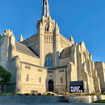
The Rev. Jen Crow didn't know federal agents had circled her church during a memorial service until months later, when the details surfaced in court documents connected to a federal investigation of anti-ICE activists. Now she wants to know the full extent of the surveillance.[1]
Three Twin Cities churches filed a court brief on Nov. 18 asking a federal judge to compel the Department of Homeland Security to disclose the full extent of its undercover surveillance during Operation Metro Surge, which brought thousands of federal immigration agents to Minnesota last winter.[2]
The filing comes from First Universalist Church of Minneapolis, Hennepin Avenue United Methodist Church and St. John the Evangelist Episcopal Church in St. Paul.
Join thousands who get the latest security news, scams, and policy changes every week, right to their inbox.
By submitting this form you agree to receive emails from All About Cookies and to the
privacy policy and
terms.
What agents reportedly did inside and outside church walls
The surveillance details emerged earlier this year through discovery in a separate criminal case, U.S. v. Isaac Auman Sant, in which a federal grand jury indicted 15 people in June on charges of conspiracy to impede or injure federal officers tied to blockades and protests around the Whipple Federal Building.
What the released documents show, according to the churches' brief, is that Homeland Security Investigations ran undercover efforts it internally called "Operation Puppet Master" and "Project Whipple Shield," sending agents into libraries, parks, union halls and churches.
At First Universalist, an undercover agent attended a Dec. 13, 2025 meeting of the Sunrise Movement. The agent's own report found no crime, but concluded "further attendance was determined to be necessary to rule out violations of law."
A month later, on Jan. 10, agents "openly surveilled" the church from outside during a memorial service, repeatedly circling the block, Crow told MPR News.
In late February, at least nine HSI agents conducted what the brief calls "pattern of life" surveillance, following an individual later identified as Emmett Doyle to Hennepin Avenue United Methodist Church, where they photographed the building, people and vehicles, and ran a records check that identified the registered owners of four cars.
In April, agents staked out St. John the Evangelist for more than two and a half hours while an undercover agent sat in on a meeting of Direct Action Minnesota, a group federal prosecutors describe as an "antifa affinity group." Outside, agents filmed vehicles in the parking lot and ran registration checks on each one.
The churches say they're not the only ones. The brief also documents an undercover agent joining a boxing class at University Baptist Church in Minneapolis, agents compiling a detailed "intel workup" on attendees at Prince of Peace Lutheran Church in Roseville that included names, photos, addresses, employers and vehicle registrations, and an undercover agent recording attendee names at a presentation in Ann Arbor, Michigan.
Agents also monitored meetings at a public library, a city park and the United Labor Center, along with a "No Kings" protest and an antiwar rally that had nothing to do with the case at hand.
A broader dragnet, according to the filing
The surveillance wasn't limited to in-person meetings. HSI also obtained years of financial records from labor unions, including SEIU and the Communications Workers of America, through administrative summonses, and instructed at least one bank not to disclose those summonses "for an indefinite period of time," according to the churches' filing.
The operation traces back to a presidential directive. President Trump issued National Security Presidential Memorandum-7 in September 2025, targeting people he called "anarchists and agitators," and prosecutors cited it in building the case against the 15 defendants.
The government has already acknowledged withholding at least five "Project Whipple Shield" reports, characterizing them as part of "a separate investigation," something the churches argue they have no way to verify without seeing more. The churches are asking a judge to force into the open not just what's already surfaced, but what hasn't.
Churches say the fallout is already here
For the congregations involved, this isn't an abstract debate about government overreach. First Universalist hired an additional security guard and now locks all but one entrance. Hennepin Avenue's Dignity Center started locking its doors, training greeters to screen visitors and posted signs barring immigration enforcement staging on its property. St. John's installed security cameras, began locking doors on weekdays and now requires buzzer entry.
Crow said some congregants have stopped coming to services in person since the surveillance came to light. "It would be nice to have the full discovery and be able to see how often the government was here, what they were looking for and to have an honest record of their behavior for this period of time," she told MPR News.
The churches' filing is the second amicus brief supporting the defense's discovery motion. In August, the Cato Institute, the Foundation for Individual Rights and Expression, and the Society for the Rule of Law filed a similar brief arguing the surveillance and prosecution were "designed to chill participation in protest activity, quell dissent and silence critics of Trump administration policies under the guise of combating terrorism."
Where the case stands
Assistant U.S. Attorney Tory Sailer opposed the underlying discovery request in a Sept. 10 filing, calling it "extraordinarily broad" and arguing it isn't necessary for the defendants' case. Sailer also warned that further disclosure about undercover operations could put confidential informants and agents at risk. A spokesperson for the Minnesota U.S. Attorney's Office declined to comment on the churches' brief.
The motion remains pending before a federal magistrate judge, who is expected to rule within a couple of weeks of the Nov. 18 filing, according to Fox 9. Until then, the churches and the activists charged alongside them are left not knowing how much of their worship, grief and organizing was quietly logged by the government.
The Minnesota case also illustrates how seemingly mundane information, such as a vehicle's registration, can help investigators establish where someone has been and whom they associate with.
AllAboutCookies writers and editors score products based on a number of objective features as well as our expert editorial assessment. Our partners do not influence how we rate products.
Kalleigh Lane is the Managing Editor at All About Cookies, where she helped develop the site's star rating system for product reviews and specializes in testing VPNs, ad blockers, and parental controls on Android and PC. She brings more than five years of experience editing and writing across cybersecurity, tech, and finance, and she has authored and edited over 300 articles for All About Cookies. Before joining AAC, she worked as a journalist and editor at CTV News and the Globe and Mail, and she holds a Master of Arts in English Literature from the University of Toronto.