Beyond 150 Million Licenses: Lawmakers Say IDScan Leak Hit Your Medical Cards and Military IDs Too
Six lawmakers are demanding answers about how identity verification companies store sensitive documents following a breach linked to millions of stolen IDs.
We receive compensation from the products and services mentioned in
this story, but the opinions are the
author's own. Compensation may impact where offers appear. We have not included all available products or offers.
Learn more about
how we make money
and
our editorial policies.
Advertiser Disclosure
All About Cookies is an independent, advertising-supported website. Some of the offers that appear on this
site are from third-party advertisers from which All About Cookies receives compensation. This compensation
may impact how and where products appear on this site (including, for example, the order in which they
appear).
All About Cookies does not include all financial or credit offers that might be available to consumers nor
do
we include all companies or all available products. Information is accurate as of the publishing date and
has
not been provided or endorsed by the advertiser.
Close
Editorial Policy
The All About Cookies editorial team strives to provide accurate, in-depth information and reviews to help
you, our reader, make online privacy decisions with confidence. Here's what you can expect from us:
All About Cookies makes money when you click the links on our site to some of the products and offers that
we mention. These partnerships do not influence our opinions or recommendations. Read more about how we
make money.
Partners are not able to review or request changes to our content except for compliance reasons.
We aim to make sure everything on our site is up-to-date and accurate as of the publishing date, but we
cannot guarantee we haven't missed something. It's your responsibility to double-check all information
before making any decision. If you spot something that looks wrong, please let us know.
Close
Six federal lawmakers are demanding answers from identity verification companies after a massive data breach reportedly exposed more than 150 million driver's licenses, nearly 600,000 medical cards and other sensitive documents.
In a November 23 letter, Sens. Brian Schatz, Marsha Blackburn, Andy Kim and Katie Britt, along with Reps. Kweisi Mfume and Pete Sessions, raised concerns about the collection and storage of personal information after discovering an identity theft service called Nexus.[1]
The lawmakers contacted IDScan.net, Persona Identities, Clear Secure, Intellicheck and ID.me, giving the companies until January 5, 2027, to explain how they handle and protect consumers' personal data.
Join thousands who get the latest security news, scams, and policy changes every week, right to their inbox.
By submitting this form you agree to receive emails from All About Cookies and to the
privacy policy and
terms.
The breach goes beyond driver’s licenses
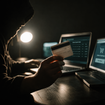
As we reported in September, a dark web service called Nexus claimed to possess more than 153 million driver's licenses, including the ultraviolet and infrared scans used to verify their authenticity.
Federal lawmakers are now scrutinizing the broader privacy implications of the breach, citing the reported exposure of nearly 600,000 medical cards alongside employment authorizations, military identification cards and travel documents.
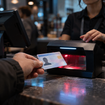
For people who handed over their identification at a dispensary, rental car counter or other business, the congressional inquiry raises a particularly pressing concern: why are companies retaining these sensitive documents long after verifying customers' identities?
The lawmakers' letter also says the stolen data included ultraviolet and infrared scans of licenses, not just flat photos, the kind of detailed imaging increasingly used to catch fake IDs.
Researchers discovered Nexus, the dark web marketplace selling the data, in September, and it has since gone offline, though lawmakers warn that doesn't mean the data is gone.
How the breach happened, and why it dragged on
The criminals behind Nexus claimed they had been stealing data for more than a year. However, according to IDScan.net's updated breach notification, unauthorized access to its cloud environment occurred between April 4 and September 2, 2026. The company says the incident was limited to its VeriScan platform.
The problem extends beyond IDScan. According to The Record, independent tech journalist and original story breaker, Brian Krebs, identified more than two dozen identity verification companies that retain scanned IDs, often by default. Some businesses even charge extra to disable the collection of these documents.
A routine age or identity check could therefore leave a digital copy of your driver's license or medical marijuana card sitting in a third-party database long after you've left the store. Every additional document these companies retain increases the amount of sensitive information potentially exposed in a breach.
What the letter is asking for
The lawmakers want each company to answer questions by January 5, 2027 covering how long they keep people's personal data, whether they sell or share it with third parties, how they secure it, and whether customers are told what's being collected and stored. They specifically flagged practices like data minimization, use limitations and consumer notice as areas where they want clear answers.
"The consequences of this theft may be widespread and persistent," the lawmakers warned.
None of the five companies has publicly responded yet. A spokesperson for IDScan did not immediately respond to a request for comment from The Record. The FBI's investigation into the underlying breach is still open, and there's no confirmed final victim count or attribution.
What you can actually do right now
IDScan.net is offering free credit monitoring and identity protection services to potentially affected individuals. If you're concerned your information was involved, you can contact the company's dedicated assistance line at 1-833-516-2980, Monday through Friday, from 8 a.m. to 8 p.m. ET, excluding holidays.
You can also take the following precautions:
Check your credit reports and credit score regularly for new accounts or inquiries you don't recognize.
If you believe your license or other ID was used to impersonate you, report it at IdentityTheft.gov, to local law enforcement, and to your state attorney general.
Consider identity theft monitoring, including dark web monitoring that can flag if your license or other personal documents show up for sale again. If you're weighing whether that kind of service is worth paying for, read up on whether identity theft protection is worth it and compare identity theft protection services before signing up.
Freeze your credit. Placing a free credit freeze with all three major credit bureaus can help prevent criminals from opening new credit accounts in your name.
Contact your state's driver's licensing agency. If you suspect someone is using your driver's license fraudulently, ask whether you can obtain a replacement with a new identification number.
4.8
AllAboutCookies writers and editors score products based on a number of objective features as well as our expert editorial assessment. Our partners do not influence how we rate products.
Kalleigh Lane is the Managing Editor at All About Cookies, where she helped develop the site's star rating system for product reviews and specializes in testing VPNs, ad blockers, and parental controls on Android and PC. She brings more than five years of experience editing and writing across cybersecurity, tech, and finance, and she has authored and edited over 300 articles for All About Cookies. Before joining AAC, she worked as a journalist and editor at CTV News and the Globe and Mail, and she holds a Master of Arts in English Literature from the University of Toronto.