St. Louis Police Drones Reach 18 Scenes First, but Video Retention Rules Remain Unclear
St. Louis police drones logged 58 flights in their first weeks of operation, but questions remain about how long footage of residents and their neighborhoods is kept.
We receive compensation from the products and services mentioned in
this story, but the opinions are the
author's own. Compensation may impact where offers appear. We have not included all available products or offers.
Learn more about
how we make money
and
our editorial policies.
Advertiser Disclosure
All About Cookies is an independent, advertising-supported website. Some of the offers that appear on this
site are from third-party advertisers from which All About Cookies receives compensation. This compensation
may impact how and where products appear on this site (including, for example, the order in which they
appear).
All About Cookies does not include all financial or credit offers that might be available to consumers nor
do
we include all companies or all available products. Information is accurate as of the publishing date and
has
not been provided or endorsed by the advertiser.
Close
Editorial Policy
The All About Cookies editorial team strives to provide accurate, in-depth information and reviews to help
you, our reader, make online privacy decisions with confidence. Here's what you can expect from us:
All About Cookies makes money when you click the links on our site to some of the products and offers that
we mention. These partnerships do not influence our opinions or recommendations. Read more about how we
make money.
Partners are not able to review or request changes to our content except for compliance reasons.
We aim to make sure everything on our site is up-to-date and accurate as of the publishing date, but we
cannot guarantee we haven't missed something. It's your responsibility to double-check all information
before making any decision. If you spot something that looks wrong, please let us know.
Close
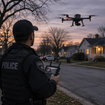
St. Louis police drones have already reached 18 emergency scenes before officers, according to the department's public records. Five flights even helped determine that no officer needed to respond in person. But while the technology is improving emergency response times, questions remain about what happens to the footage it collects.[1]
The department's new Drone as First Responder program logged 58 flights between its November 4 approval and November 21, according to its transparency portal.
Although police say the drones aren't used for routine surveillance, their cameras could still capture nearby homes, bystanders and other people who have nothing to do with an emergency.
Join thousands who get the latest security news, scams, and policy changes every week, right to their inbox.
By submitting this form you agree to receive emails from All About Cookies and to the
privacy policy and
terms.
What the drone sees on the way to a call
St. Louis says its drones aren't used for routine patrols and only launch in response to a specific 911 call. But a drone traveling to one address still passes over other addresses, and its camera is on the whole time.
The department's drone FAQ states the camera faces the horizon while the drone is in transit and tilts downward only once it arrives at the scene. Special Order 5-35, the rule the police board approved on November 4, doesn't actually require that. It says transit cameras "will be used primarily for safety of flight and navigation," without setting a specific angle rule.
The order does set some real limits: it bans "generalized" or random surveillance, requires a warrant, consent, or a recognized emergency before pilots intentionally view private areas, and keeps the drones unarmed. Facial recognition is restricted unless separately authorized.
Where the footage goes, and for how long
Once a drone does record something, that video lands in BRINC's LiveOps platform, hosted on U.S.-based servers and encrypted with AES-256 to meet federal criminal-justice data standards, according to SLMPD's FAQ. The department says drone footage is treated like any other recorded evidence, meaning it's subject to public-records requests and court-ordered disclosure.
What the FAQ doesn't say is how long any of it sits there before getting deleted.
"SLMPD executives are developing retention record policies and it will be finalized before the DFR program launches," the FAQ states, a sentence that had not changed as of November 21, more than two weeks after flights began.
Special Order 5-35 itself doesn't set a retention period either. It simply says drone recordings follow the department's existing video retention policy, which points back to Special Order 9-08, a records order dated 2014 that predates drones entirely. That order defers to Missouri's law enforcement records retention schedule, which sets a 30-day minimum for audio and video recordings and names no maximum.
Based on the state's records retention schedule, drone footage appears to be subject to a minimum 30-day retention period. However, the department hasn't published a clear maximum for how long recordings can be stored or finalized a drone-specific policy explaining when footage must be deleted.
A mayor's dissent and a privacy advocate's questions
The police board approved the operating rules in a 4-1 vote on November 4. Mayor Cara Spencer cast the only no vote, citing concerns about privacy protections, the limited time commissioners had to review the policy, and the lack of public participation beforehand.
Jay Stanley, a privacy expert with the American Civil Liberties Union, said he was glad the policy explicitly ruled out routine surveillance. But he said real questions remain unanswered, including how long footage is kept and whether it could later be run through face recognition or other AI analysis, something he called "completely doable with today's technology."
The department does have a public-facing accountability step built in. Special Order 5-35 says SLMPD "may" publish flight information after 72 hours unless a flight is legally exempt from disclosure, and the transparency portal does show flight paths, first-arrival stats, and outcomes.
Not what happens to the footage, though.
The program keeps expanding while the policy stays unfinished
The drone program continues to expand.
Coverage expanded on November 17 to include South Patrol, after starting in North and Central Patrol. The department's own numbers show the program growing fast: 47 flights reported as of November 16 had become 58 by November 21.
The clearest success story so far came on November 5, when two drones helped search for a missing 14-year-old with autism by checking locations the teen was known to visit.
An officer on the ground ultimately found the teen, who was returned home safely. It's the kind of outcome the department points to as justification for the technology.
On November 20, Lt. Marcos Silva, the Aerial Response Unit's commander, published an op-ed in the St. Louis Post-Dispatch inviting residents and neighborhood groups to weigh in on where drones help and "where they believe our rules could be clearer," offering drones@slmpd.org as a contact.
Residents can review published drone flight paths through the department's transparency portal and contact the Aerial Response Unit at drones@slmpd.org to ask about its video retention policies.
For those concerned about the broader implications, understanding how government mass surveillance works can help put these developments into context.
Kalleigh Lane is the Managing Editor at All About Cookies, where she helped develop the site's star rating system for product reviews and specializes in testing VPNs, ad blockers, and parental controls on Android and PC. She brings more than five years of experience editing and writing across cybersecurity, tech, and finance, and she has authored and edited over 300 articles for All About Cookies. Before joining AAC, she worked as a journalist and editor at CTV News and the Globe and Mail, and she holds a Master of Arts in English Literature from the University of Toronto.