We receive compensation from the products and services mentioned in
this story, but the opinions are the
author's own. Compensation may impact where offers appear. We have not included all available products or offers.
Learn more about
how we make money
and
our editorial policies.
Advertiser Disclosure
All About Cookies is an independent, advertising-supported website. Some of the offers that appear on this
site are from third-party advertisers from which All About Cookies receives compensation. This compensation
may impact how and where products appear on this site (including, for example, the order in which they
appear).
All About Cookies does not include all financial or credit offers that might be available to consumers nor
do
we include all companies or all available products. Information is accurate as of the publishing date and
has
not been provided or endorsed by the advertiser.
Close
Editorial Policy
The All About Cookies editorial team strives to provide accurate, in-depth information and reviews to help
you, our reader, make online privacy decisions with confidence. Here's what you can expect from us:
All About Cookies makes money when you click the links on our site to some of the products and offers that
we mention. These partnerships do not influence our opinions or recommendations. Read more about how we
make money.
Partners are not able to review or request changes to our content except for compliance reasons.
We aim to make sure everything on our site is up-to-date and accurate as of the publishing date, but we
cannot guarantee we haven't missed something. It's your responsibility to double-check all information
before making any decision. If you spot something that looks wrong, please let us know.
Close
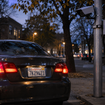
It was just after noon on a Sunday in Austin when an ICE officer pointed a scanner at a blue Toyota Corolla parked outside a restaurant, hazard lights blinking like a delivery driver running in for a pickup.[1]
The officer wasn't investigating a crime. According to subsequent court testimony, the officer was conducting random license-plate checks, looking for people ICE could arrest.
That September 20 stop, detailed in a new report from The Atlantic, ended with the car's driver, 28-year-old Venezuelan national Wilber Rafael Garcés Pérez, shot in the back by an ICE officer after he drove off during a second attempted stop. Garcés Pérez survived and is now charged with assaulting a federal officer.
A DHS special agent later testified in federal court that the officers involved were simply "doing random checks on vehicles and at random places" that day, calling it routine.
That single sentence should give any driver pause. The technology that flagged Garcés Pérez's car isn't some specialized tool reserved for fugitives or stolen vehicles.
It's an automated license-plate reader, the same kind of camera system mounted on patrol cars, telephone poles and highway overpasses in thousands of communities across the country, and it's now reportedly being used to scan ordinary, parked vehicles just to see who they belong to.
Join thousands who get the latest security news, scams, and policy changes every week, right to their inbox.
By submitting this form you agree to receive emails from All About Cookies and to the
privacy policy and
terms.
How much can a plate scanner actually reveal
A license-plate reader captures a vehicle's plate number, along with when and where it was spotted. ICE can cross-reference that information with other databases to identify the registered owner, check immigration records and uncover other personal details. However, a plate scan alone can't establish who's actually driving.
ICE's access to this kind of data isn't new. The agency has purchased query-based access to a commercial license-plate database since 2017, and Privacy Impact Assessments published by the Department of Homeland Security in 2015, 2017 and 2021 describe the program's growth. The 2021 version documented an expanded toolkit available to authorized ICE personnel: the ability to search a specific geographic area, run queries on partial plate numbers, and scan plates directly through a mobile phone app.
That 2021 assessment also described safeguards meant to limit abuse, including restrictions around sensitive locations, protections for First Amendment activity, and a rule limiting geographic-area searches to Homeland Security Investigations personnel rather than the enforcement arm that handles deportations. Whether those safeguards still apply today is an open question.
ICE is also testing a mobile scanning app connected to databases including Palantir's ELITE system. The app can help officers retrieve personal records using a license plate. The report says successful matches remain in an officer's search history for 30 days, while searches without a match are deleted within 72 hours. Those limits don't necessarily govern how long the underlying vehicle-location data is stored.
A new contract, and a lot of unknowns
On November 12, ICE posted a procurement notice for a sole-source, four-month bridge contract worth $1.2 million with Thomson Reuters Special Services, intended to keep nationwide access to commercial plate-recognition data running without interruption, according to Biometric Update. It's a continuation of a relationship that dates back years. Thomson Reuters received a $22.8 million ICE contract in 2021 for plate-recognition services built on Motorola technology.
What's different this time is how little the public gets to see. ICE is withholding the performance work statement, the document that would normally spell out exactly what the new contract allows, on law enforcement sensitivity grounds. That means the precise rules governing access, retention and searches under this specific agreement aren't available to the public right now.
An earlier procurement description gives some sense of scale, even if it doesn't confirm current numbers: a database pulling in at least 30 million new plate scans every month, covering at least 25 states and 24 of the country's 30 largest metro areas, with automated alerts when a flagged vehicle shows up and the ability to load up to 2,500 plates at once for monitoring. Whether those figures still describe the system today isn't established by the new notice.
Local cameras, federal reach
Even drivers in places that have passed laws limiting cooperation with federal immigration enforcement aren't necessarily outside the system's reach. ICE doesn't always need a direct contract with a city to get access to that city's plate-reader footage. Local police can run the searches on its behalf.
Between January 2024 and August 2026, police departments across the country searched Springfield, Massachusetts's Flock Safety data nearly 1,500 times for reasons tied to immigration enforcement, according to the ACLU of Massachusetts.
Searches tied to immigration enforcement peaked in March 2025 at 428 in a single month. Nationwide lookups, single searches that could sweep across thousands of camera networks at once, didn't stop until Springfield police limited outside access to nearby states in early 2026, a decision made by local policy rather than any law, meaning it could be reversed.
Flock Safety says it doesn't have a direct contract with ICE or other DHS agencies. But local agencies have reportedly run lookups on the federal government's behalf anyway. More than 4,000 searches tagged with terms like "immigration" or "ICE" have turned up in agency logs, including in California, Colorado and Illinois, states that restrict sharing plate data with federal immigration authorities, according to Biometric Update's reporting on 404 Media's findings.
ICE also runs a national "immigration violator" list through the National Crime Information Center that's used by hundreds of local departments, the Electronic Frontier Foundation notes, including some whose own policies bar them from assisting immigration enforcement. In 2021, EFF and the ACLU of California sued Marin County's sheriff over sharing plate data with ICE and CBP, alleging violations of state privacy laws; the sheriff agreed to stop sharing data outside California as part of a settlement.
What drivers can actually do
There's no way to opt out of a camera photographing your plate on a public street. But you can find out how exposed you are and push for limits where you live.
Start by checking whether your city or county has a contract with Flock Safety or a similar vendor, and look up that agency's stated data-sharing and retention policy. Some cities have already canceled or suspended their contracts over exactly these concerns, and public pressure has been part of why.
Where public records laws allow it, you can also request a local police department's plate-reader search logs and data-sharing records, the way advocacy groups did in Massachusetts and California. Those logs are often the only way outside groups have caught agencies running searches for federal immigration agents despite state restrictions.
Take Control of Your Online Privacy
5.0
AllAboutCookies writers and editors score products based on a number of objective features as well as our expert editorial assessment. Our partners do not influence how we rate products.
Thomas Kent is a multi-disciplined reporter with over a decade of experience covering online platforms, digital trends, and consumer-facing tech.
Tom focuses on digital privacy, data tracking, and user behavior, with a particular interest in how cookies, online surveillance, and platform design shape the modern internet experience. His reporting takes a research-driven, news-focused approach, translating complex technical topics into clear, accessible insights.